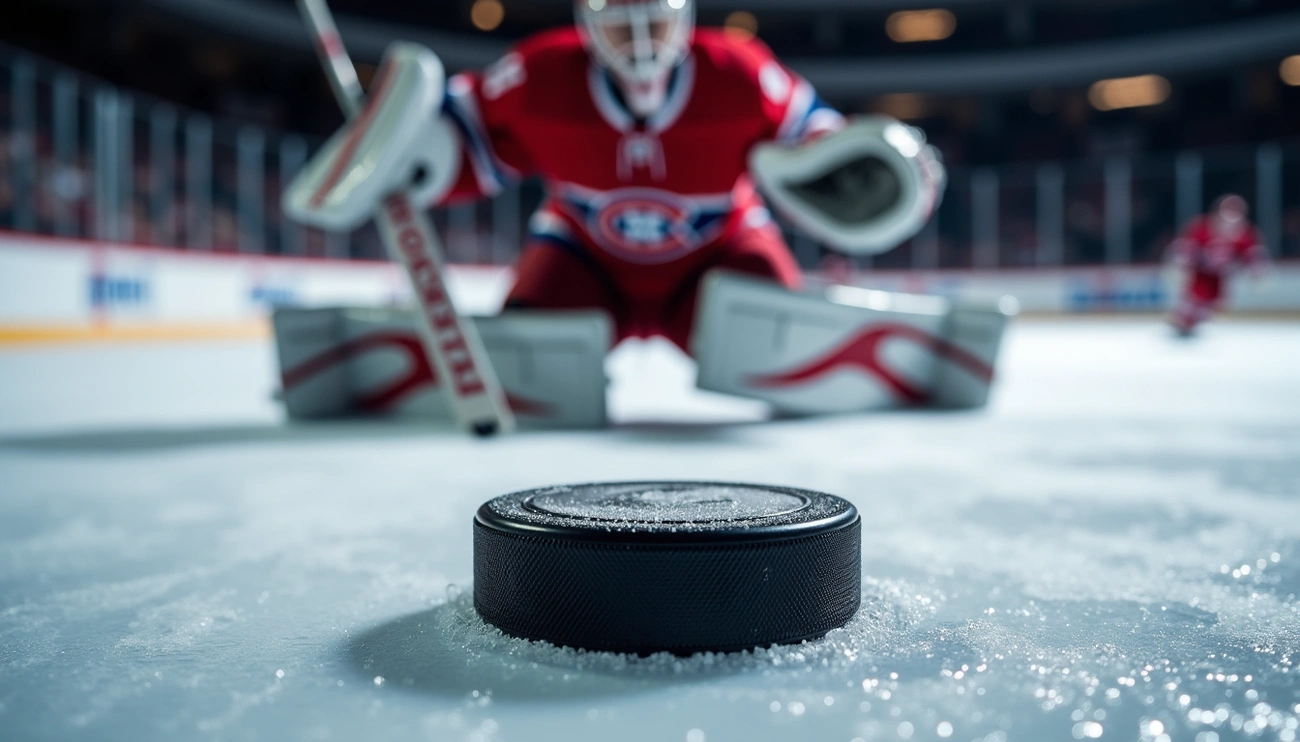
Did you know these 5 fun facts about hockey might completely change how you view the game? While we often focus on the goals and fights, hockey’s fascinating history and unique requirements make it truly special. Surprisingly, hockey has been played for over 4,000 years, with the earliest recorded games dating back to Ancient Egypt. In fact, players can lose up to 10 pounds or more during a single game due to the sport’s intense physical demands. Additionally, hockey pucks are kept frozen until needed and approximately 12 pucks are used in NHL games because they thaw so quickly. Hockey trivia enthusiasts might be interested to learn that the longest NHL game in history lasted an incredible 176 minutes and 30 seconds, while the fastest recorded shot clocked in at a blistering 108.8 mph. These fun facts about ice hockey are just the beginning of what we’ll explore in this article.
Hockey puck stays frozen to improve gameplay
One of the most fascinating aspects of professional ice hockey lies beneath the surface of the game – specifically, in how the equipment is prepared. The hockey puck, that small black disk flying across the ice at incredible speeds, undergoes special preparation that significantly impacts gameplay quality.
Hockey puck stays frozen to improve gameplay
The black vulcanized rubber disk you see gliding across the ice during hockey games isn’t just pulled from a box at room temperature. Professional leagues like the NHL and AHL deliberately freeze their pucks before and during games for specific performance reasons. This seemingly small detail makes a substantial difference in how the game unfolds.
Why pucks are kept on ice before games
Professional hockey leagues maintain pucks at freezing temperatures primarily to ensure optimal performance and safety. The NHL and AHL freeze pucks before every game, storing them at temperatures around 14 degrees Fahrenheit (-10 degrees Celsius). Furthermore, this isn’t just a pre-game ritual – during matches, pucks are continuously rotated, with fresh frozen pucks typically introduced every two minutes of game action.
The fundamental reason behind this practice stems from the physical properties of vulcanized rubber. When at room temperature, hockey pucks behave similarly to tennis balls, with a tendency to bounce unpredictably when struck. This erratic movement presents multiple problems:
- Safety concerns: Warmer pucks risk going airborne more frequently, potentially injuring players and spectators
- Gameplay disruption: Bouncing pucks lead to less controlled play, affecting the flow and quality of the game
- Historical regression: Games played with warm pucks resemble hurling (the ancient sport from which hockey evolved), with players awkwardly swatting at airborne pucks
Former NHL player Matt Stajan confirmed the importance of this practice: “The NHL and most professional leagues will freeze the pucks for games. A frozen puck will slide/glide way better on the ice. It would also not bounce as much. It actually makes quite the difference in how the puck feels when you handle and stick handle it”.
Essentially, freezing pucks transforms them at a molecular level. The cold temperature alters the rubber’s structure, making it firmer and less elastic. This rigidity contributes to better performance on ice, allowing for smoother gliding action. Without this freezing process, the natural properties of rubber would create friction and inconsistency during play.
NHL Vice President of Facilities Operations Dan Craig explains: “Hockey pucks are made of vulcanized rubber and glide smoother and faster when frozen. Freezing a puck eliminates bouncing, and game officials closely monitor the puck for temperature changes that affect performance while in play”.
How frozen pucks reduce bounce and increase control
The science behind frozen pucks reveals why they perform better on ice. Firstly, frozen pucks maintain more consistent shape and hardness throughout gameplay. Although all regulation pucks measure one inch thick and three inches in diameter, weighing six ounces, their performance characteristics change dramatically based on temperature.
The benefits of frozen pucks include:
- Enhanced sliding properties: Cold pucks create less friction against the ice, allowing for smoother movement
- Improved passing precision: Players can make faster and more accurate passes with pucks that maintain consistent movement patterns
- Greater shot power: Since frozen pucks don’t deform as much upon impact, more energy transfers into forward momentum rather than being absorbed by the puck
- Reduced stickiness: Warm pucks can develop a sticky surface that interferes with smooth puck handling
To understand the dramatic difference temperature makes, consider a simple experiment: when dropping a room-temperature puck and a frozen puck from the same height onto a hard surface, the warmer puck will bounce noticeably higher. This occurs because temperature affects the puck’s stored energy – a warmer puck stores more energy and thus bounces more vigorously.
Former NHL player Troy Brouwer notes: “The puck slides much better on the ice being a colder temperature, rather than them trying to melt the ice if it was warmer. It also helps with how much the puck bounces. With pucks being rubber they bounce much more at a warmer temperature”.
Consequently, frozen pucks maintain better contact with the ice surface, creating a faster-paced game with improved skill execution. When players can focus on strategy rather than adapting to unpredictable puck behavior, the game becomes more thrilling for fans and more satisfying for athletes.
The importance of this practice is evident in the NHL’s logistics. Typically, 15-20 pucks are used during a single game, with most discarded afterward due to damage from play. These pucks are stored in a small freezer within the penalty box area, where they remain until needed. The NHL rulebook specifically mandates: “The home team shall be responsible for providing an adequate supply of official pucks which shall be kept in a frozen condition”.
Studies conducted on the elastomeric properties of hockey pucks confirm the relationship between temperature and performance. Research at Worcester Polytechnic Institute concluded: “Freezing conditions can affect impact toughness and performance of the puck, along with other mechanical properties. Controlling these puck properties will allow for improved puck performance during game play”.
For the 2019 Winter Classic, the NHL even introduced color-changing pucks that indicated when a puck had warmed too much and needed replacement. This innovation highlights how seriously professional hockey takes this aspect of equipment management.
Although seemingly minor, the temperature of the hockey puck significantly influences the quality and character of the game. From reducing dangerous bounces to enabling crisp passes and powerful shots, frozen pucks help create the fast, skillful hockey experience that fans and players have come to expect from professional play.
Goalies can lose up to 10 pounds in one game
Hockey goalies face extraordinary physical challenges unlike any other position in sports. Behind their padded exterior lies a remarkable truth about the intensity of their work.
Goalies can lose up to 10 pounds in one game
The position between the pipes might look stationary compared to forwards racing up and down the ice, yet the reality of goaltending reveals a physically grueling role. Florida Panthers goaltender Sergei Bobrovsky reported losing between 15-20 pounds during a single game—a staggering amount that highlights the extreme physical demands of the position. Even for smaller goalies, former professional John Garrett, who was 5-foot-8 and 175 pounds, reported losing between seven to ten pounds per game.
Why hockey is physically demanding
Unlike other players who rotate through shifts, goaltenders typically play the entire game without substitution. They usually play all three 20-minute periods with only 15-18 minutes of rest between each period. This continuous play creates unique physiological demands on their bodies compared to skaters who enjoy frequent rest intervals.
The physical requirements become even more intense during penalty situations. When a team faces a power play (playing short-handed with 4 vs. 5 players), goalies must move laterally and vertically more frequently, increasing their workload substantially. These movements require explosive power, flexibility, and endurance all at once.
Moreover, goaltenders need a specific set of physical attributes that differ from other positions. Their role demands quickness, agility, speed, explosiveness, flexibility, fast reaction time, eye-hand coordination, and rapid decision-making abilities. Throughout hockey’s evolution, rule changes have increased offensive play and reduced goaltenders’ ability to play the puck in certain areas, further intensifying their physical requirements.
The NHL’s 2005-2006 season saw teams averaging 480 powerplays compared to just 348 in the 2003-2004 season. This increase in powerplays meant goalies faced more shots and needed to make more saves, requiring greater physical conditioning than in previous eras.
Apart from the physical demands, the equipment itself contributes significantly to the challenge. Hockey players wear heavy protective gear that dramatically impacts their fluid losses and sweat rate. This equipment, coupled with the intensity of movement, explains why ice hockey players can lose 5-8 pounds per game, mostly in water weight.
Physiologically, goaltenders show different responses to game play compared to skaters. They typically have lower VO2max values (maximum oxygen consumption) and reach lower post-game blood lactate concentrations. Nonetheless, their position requires tremendous physical fitness to endure the unique demands of constant readiness and explosive movements.
What players do to stay hydrated during games
Given these extreme physical demands, hydration strategies become critical for performance and safety. Professional hockey players can burn approximately 1500 calories or more during a game, coupled with significant fluid loss that must be replaced.
Dehydration of approximately 2% or more of body weight (about a 3-pound loss for a 150-pound athlete) can negatively affect performance. To combat this, players must implement comprehensive hydration protocols before, during, and after games.
The recommended strategy for hockey players includes:
- Pre-game preparation – Starting well-hydrated and well-fueled before stepping onto the ice
- During-game hydration – Sipping water throughout training and gulping fluids between shifts and periods
- Post-game recovery – Replacing lost fluids immediately after play to restore normal hydration levels
For optimal hydration during play, hockey athletes should consume approximately 6-12 ounces of water every 15-20 minutes during exercise. For games lasting over an hour, sports drinks containing carbohydrates, fluids, and electrolytes become more effective than water alone. These drinks help replace not just water but also the essential electrolytes lost through sweat.
Professional goalies like Roberto Luongo have experienced the extreme consequences of dehydration. After the longest game in Vancouver Canucks history (137 minutes and 53 seconds), Luongo required intravenous treatment to restore fluids after constant consumption of sports drinks between periods to prevent cramping. As he described it: “It was probably the most exhausting thing I have ever been a part of”.
The specific physical challenges for hockey players differ by position. Professional hockey players (AHL and NHL) lose approximately 2 liters of fluid per hour, while junior hockey players average about 1.6 liters per hour. Heavy sweaters performing intense exercise can lose up to two quarts of sweat hourly, yet the small intestine can only absorb one quart of water per hour at maximum. This disparity explains why staying ahead of dehydration becomes crucial.
Beyond basic hydration, the composition of fluids matters tremendously. Athletes need a 6-8% solution containing electrolytes and carbohydrates. The carbohydrates act like a sponge, drawing water into muscle cells while providing energy. The recommended carbohydrate intake for team sport athletes, including hockey players, is 30-60 grams per hour.
Some players also add protein or amino acids to their hydration mix. These components help prevent muscle breakdown and enhance water absorption through the small intestine. For players who sweat heavily and lose substantial sodium, consuming beef jerky alongside post-game hydration can help restore sodium balance.
Sergei Bobrovsky, despite losing 15-20 pounds during games, maintains his performance through careful attention to hydration. As he explained: “You don’t feel much about your body—it’s more about mental”. This mindset, coupled with proper hydration strategies, allows goalies to perform at elite levels despite the extreme physical demands.
Proper hydration not only affects performance but also safety. Dehydration increases the risk of heat illness by straining the cardiovascular system and raising body temperature. For hockey players, this translates to increased fatigue, decreased reaction time, and greater injury risk.
The medical community consistently emphasizes the importance of consuming carbohydrates and protein while remaining well-hydrated to sustain performance. Even as each player develops individual preferences—some eating during intermissions while others avoid food during games—all must ensure adequate hydration, particularly with low-sugar sports drinks.
Hockey players can monitor their hydration status by tracking body weight before and after training sessions and noting fluid consumption. Maintaining clear or light yellow urine color throughout the day also serves as a practical indicator of proper hydration.
For ice hockey fans, understanding these physical demands adds another dimension to appreciating the sport. The next time you watch a goalie make 40 saves in a game, remember they might be doing it while having lost several pounds of body weight—truly one of the most remarkable physical feats in professional sports.
Octopus-throwing becomes a Red Wings tradition
Among all sports traditions in North America, few match the bizarre spectacle of Detroit Red Wings fans hurling octopuses onto the ice. This odd ritual stands as one of hockey’s most peculiar yet endearing fan traditions.
Octopus-throwing becomes a Red Wings tradition
Professional hockey boasts many unusual fan rituals, yet none quite captures the imagination like Detroit’s eight-legged tradition. Throughout decades of Red Wings history, fans have smuggled octopi into arenas, waiting for the perfect moment to launch them onto the playing surface – a practice that has become synonymous with Detroit hockey culture.
How the tradition started in 1952
The octopus-throwing tradition traces back to a specific date: April 15, 1952. On this evening at Detroit’s Olympia Stadium, two brothers named Pete and Jerry Cusimano forever changed hockey culture with one unusual act. The Cusimanos, who owned a store in Detroit’s Eastern Market, brought an octopus to the game and hurled it onto the ice.
Their choice of sea creature wasn’t random. In 1952, the NHL consisted of just six teams, with only four qualifying for the playoffs. Under this format, teams needed exactly eight victories to claim the Stanley Cup championship. The brothers selected the octopus precisely because its eight tentacles symbolized the eight wins required to secure hockey’s ultimate prize.
This seemingly small act carried surprising significance. After the octopus landed on the ice, the Red Wings proceeded to sweep the Toronto Maple Leafs and Montreal Canadiens in consecutive series. Detroit captured the championship without a single playoff defeat, winning exactly eight straight games. Many fans naturally credited the eight-armed good luck charm for this perfect playoff run.
Pete Cusimano reportedly claimed that his “sacrificial octopus” directly influenced the outcome. Following this initial success, he continued the practice, appearing at every Red Wings home playoff game with an octopus, which he would throw onto the ice after Detroit’s first goal.
Getting the creatures into the arena required creativity. According to historical accounts, Cusimano initially smuggled his octopus into Olympia Stadium inside a set of bagpipes. This clandestine approach began a tradition of fans developing various techniques for sneaking octopi past arena security.
Why fans still throw octopi today
Even as the NHL expanded and playoff formats changed (now requiring 16 wins rather than 8), Detroit’s octopus tradition persisted. The eight-tentacled symbol had become too deeply ingrained in franchise identity to disappear.
The tradition reached new heights during the 1995 playoffs when fans threw 36 separate octopi onto the ice during a single game, including one specimen weighing an impressive 38 pounds. Such enthusiasm demonstrated how this quirky practice had transcended its original meaning to become a beloved ritual for Red Wings supporters.
In 1995, the franchise officially embraced the tradition by creating a mascot named “Al the Octopus”. The name honored Al Sobotka, the team’s longtime building operations manager and Zamboni driver, who became famous for retrieving octopi from the ice and twirling them triumphantly over his head.
When the team played at Joe Louis Arena, two giant inflatable versions of Al the Octopus hung from the rafters during playoff runs, symbolizing the 16 wins (represented by the 16 tentacles of two octopi) needed to claim the modern Stanley Cup.
Detroit fans are exceptionally resourceful in maintaining this tradition. After a popular source for purchasing octopi (Superior Fish Market in Royal Oak, Michigan) closed, fans found alternative suppliers like The Fish Market in Dearborn and Star Fish and Seafood Market on Gratiot Avenue. These establishments often receive octopi imported from Spain or Portugal.
True enthusiasts have even developed preparation techniques to make the octopi more arena-friendly. Some fans marinate their octopi in a mixture of lemon juice and garlic for multiple days to reduce the smell. This attention to detail underscores how seriously fans take this unusual ritual.
Certainly, the practice conflicts with official NHL regulations. According to NHL rule 63.5, objects thrown onto the ice during play or after goals can result in a bench minor penalty for the home team. In recent years, the league has attempted to curtail the tradition, with Red Wings officials confirming that throwing objects onto the ice can result in ejection from the arena.
Nevertheless, whenever the Red Wings reach the playoffs, octopi invariably find their way onto the ice. The tradition experienced renewed enthusiasm when Detroit pushed for a playoff spot in 2024 after an eight-year postseason drought. As one seafood market owner noted regarding the team’s improved fortunes: “It’s gonna be time to start moving some octopus”.
The endurance of this tradition demonstrates how deeply sporting rituals can embed themselves in fan culture. Originally tied to a specific playoff format, the octopus tradition evolved beyond its initial purpose to become an iconic symbol of Detroit hockey. Now, across generations, Red Wings fans have embraced this peculiar practice as an essential part of their hockey identity.
Presently, few NHL traditions capture the imagination quite like Detroit’s octopus toss. Even as the sport evolves, this quirky ritual remains one of the most fascinating fun facts about hockey that continues to surprise new fans discovering the sport’s unique culture and traditions.
Fans can become emergency goalies in rare cases
In professional sports, perhaps no rule creates more unexpected opportunities for regular people than hockey’s emergency backup goaltender (EBUG) system. This unique provision occasionally transforms ordinary citizens into NHL players under extraordinary circumstances.
Fans can become emergency goalies in rare cases
Professional hockey stands alone among major sports in having a mechanism for spectators to potentially participate in official games. The emergency backup goaltender rule represents one of the most fascinating fun facts about hockey, creating rare but remarkable moments when amateur players briefly join the professional ranks.
How the NHL emergency goalie rule works
The NHL’s emergency backup goaltender system exists as a practical solution to an unusual problem. Each NHL team must have one EBUG in attendance at every home game, available to either team if goaltenders become unavailable due to injuries, illness, or suspension. Importantly, these backups must be ready to step in when a replacement from the minor leagues cannot reasonably report to the NHL team in time.
For someone to qualify as an EBUG, several specific requirements must be met:
- They cannot be under any professional goaltender services contract
- They cannot be a paid team employee
- They typically must have playing experience at professional, college, or at least high school level
When activated, EBUGs sign either an amateur or professional tryout contract. Under professional tryout contracts, they receive USD 500.00 per game and keep their game-worn jersey. However, those signing amateur contracts receive no payment—only the jersey as a souvenir.
The position represents a rare intersection between professional sports and everyday life. Most EBUGs maintain regular careers, attending games primarily as spectators, occasionally practicing with teams, yet rarely seeing actual gameplay. As one EBUG described it: “It’s so few and far between, so it’s hard to expect it”.
Throughout NHL history, emergency backup goalies have logged minutes in official games only six times. This extraordinary rarity—representing less than 0.0001% of all goaltender playing time over eight regular seasons—makes each occurrence a noteworthy hockey trivia moment.
Famous example: David Ayres in 2020
On February 22, 2020, hockey history changed forever when 42-year-old David Ayres entered a game between the Carolina Hurricanes and Toronto Maple Leafs. After both Carolina goaltenders James Reimer and Petr Mrázek suffered injuries, Ayres—a building operator and Zamboni driver for the Toronto Marlies—stepped onto the ice.
The circumstances were extraordinary. Ayres had been sitting in the stands with his wife when Reimer was injured. He began getting partially dressed as a precaution, then noticed his phone “blowing up” when Mrázek was also hurt in a collision with Maple Leafs forward Kyle Clifford.
Entering midway through the second period with Carolina leading 3-1, Ayres experienced a challenging start, allowing goals on his first two shots. Hereafter, his performance improved remarkably as he stopped the next eight shots he faced.
The Hurricanes rallied around their emergency netminder. As Ayres later recalled: “These guys were awesome. They said to me, ‘Have fun with it, don’t worry about how many goals go in, this is your moment, have fun with it'”.
His performance helped seal a stunning 6-3 victory for Carolina. This achievement made Ayres the first EBUG in NHL history to be credited with a win. At 42 years and 194 days old, he became the oldest goaltender to win his NHL regular-season debut, breaking a record that had stood since 1927.
The accomplishment was especially meaningful considering Ayres had undergone a kidney transplant 15 years earlier and wasn’t sure if he would ever play hockey again. His regular job involved maintenance work and driving the ice resurfacing machine for the Toronto Marlies, where he occasionally faced shots from professional players during practice.
Following his unexpected triumph, Ayres received widespread recognition. The Hockey Hall of Fame acquired his game-used goalie stick. Carolina sold t-shirts with his name and number, with royalties going to Ayres and a portion donated to his chosen kidney foundation. The governor of North Carolina even declared him an honorary citizen of the state.
Other EBUGs have briefly entered NHL games, including Scott Foster, a 36-year-old accountant who played for the Chicago Blackhawks in 2018. Foster stopped all seven shots he faced in 14 minutes of play. Nevertheless, Ayres remains the only emergency goalie to record an official win.
These extraordinary circumstances occasionally unite professional sports with everyday life. As Warren Foegele, a Carolina player, noted about Ayres: “He probably dreams of playing in the National Hockey League. What a moment for him. Something he’ll never forget, and something we won’t either”.
The EBUG system will undergo changes beginning in the 2026-27 season, requiring teams to employ full-time traveling replacements instead of local amateurs. This shift marks the end of an era for one of hockey’s most unusual traditions—a rare rule allowing ordinary fans to become part of the game itself.
Stanley Cup is used for more than just celebration
The Stanley Cup stands as hockey’s most iconic trophy, yet beyond its ceremonial purpose lies a vessel that has experienced life’s moments more intimately than any other sports award. Throughout its 130-year history, this 35-pound silver chalice has served purposes far removed from its intended role as a championship symbol.
Players eat and drink from the Cup
Unlike trophies in other sports, the Stanley Cup transforms into a versatile dining vessel during players’ celebratory periods. The tradition of consuming food and beverages from the Cup has evolved into a celebrated ritual among champions.
Alongside champagne, which teams typically pour into the Cup immediately after winning, the trophy frequently serves as a unique container for:
- Breakfast cereals: Multiple Florida Panthers players ate Lucky Charms from the Cup following their championship
- Caviar and seafood: David Savard of the 2021 Tampa Bay Lightning filled it with caviar, scallops, and mashed potatoes
- Traditional dishes: Players often enjoy hometown foods, including borscht, pierogi, and toasted ravioli
- Ice cream sundaes: Several players have transformed the Cup into an elaborate dessert bowl
Indeed, many winners consume beer from the Cup, with Phil Pritchard, the official “Keeper of the Cup,” confirming it can hold precisely 14 cans of beer. In 2022, Colorado Avalanche player Erik Johnson even used it to serve Bloody Marys garnished with doughnuts during a brunch celebration.
Interestingly, the Cup’s dining function extends beyond human consumption. After winning in 1994, New York Rangers player Eddie Olczyk took the trophy to the Kentucky Derby, allowing the winning horse to eat oats from it. In another instance, Clark Gillies filled the Cup with dog food, letting his pet eat from hockey’s greatest prize.
Unusual uses of the Stanley Cup over the years
The Cup’s biography includes chapters far more surprising than its food-serving capabilities. Typically, each player on the championship team receives a personal day with the trophy, leading to numerous unconventional situations.
Perhaps most remarkably, the Stanley Cup has served as a baptismal font on multiple occasions. Colorado Avalanche defenseman Sylvain Lefebvre used it to christen his daughter after winning in 1996. This tradition continued when Tomas Holmström had his cousin baptize a seven-week-old daughter in it following Detroit’s 2008 championship. Most recently, in 2022, Colorado’s Jack Johnson had all three of his children baptized in the Cup.
In contrast, the trophy has also experienced less dignified moments. At least three babies have used it as an impromptu toilet—including Red Kelly’s son in 1964 and Kris Draper’s infant daughter in 1998. Nevertheless, this hasn’t deterred players from drinking from it afterward.
The Cup has subsequently found itself in peculiar predicaments. It has spent an entire night forgotten in Ottawa’s Rideau Canal after drunken players successfully kicked it in as a test of accuracy in 1905. Following the 1940 season, New York Rangers burned their arena’s mortgage in the Cup, accidentally setting the trophy itself on fire.
Across generations, the Stanley Cup has also pursued an entertainment career, appearing on television shows including “Boston Legal” and “30 Rock”. It has traveled to nightclubs, gone swimming in Mario Lemieux’s pool, and even accompanied Mark Messier to Manhattan’s Scores strip club.
In essence, these unusual experiences demonstrate why the Stanley Cup remains unparalleled among sports trophies—not just a symbol of victory, but a participant in champions’ lives in ways both profound and profoundly strange.
Conclusion
Ice hockey stands apart from other sports through these fascinating aspects that extend far beyond the scoreboard. Freezing pucks transforms gameplay by reducing bounce and enhancing control, allowing for the precision and speed that makes hockey thrilling. Additionally, the physical demands on players, especially goalies who can shed up to 10-20 pounds during a single game, highlight the extraordinary endurance required at professional levels.
Fan traditions add another layer of uniqueness to hockey culture. Detroit’s octopus-throwing ritual demonstrates how deeply sports traditions can embed themselves into team identity, persisting for decades despite rule changes and league expansion. Similarly, the emergency backup goalie system creates rare opportunities for ordinary people to step directly into professional competition – something unheard of in other major sports.
Perhaps most remarkably, the Stanley Cup transcends its role as a mere trophy. Unlike other sports awards that remain untouched on pedestals, this iconic silver chalice becomes part of champions’ lives – serving everything from breakfast cereal to baptismal water. This personal connection between players and prize embodies hockey’s distinctive character.
Though often overshadowed by other sports in popular culture, these unusual aspects make hockey truly special. The frozen pucks, physically demanding gameplay, quirky traditions, everyday heroes, and the multifunctional championship trophy collectively create a sporting experience unlike any other. Next time you watch a game, you’ll likely appreciate these elements that make ice hockey not just a sport, but a fascinating cultural phenomenon with depth beyond the obvious action on the ice.